Brain dump to to-do list: turning the pile into actions
The short version
- A brain dump is step one of five. Capture, clarify, organise, reflect, engage. Nearly everyone does the first and stops.
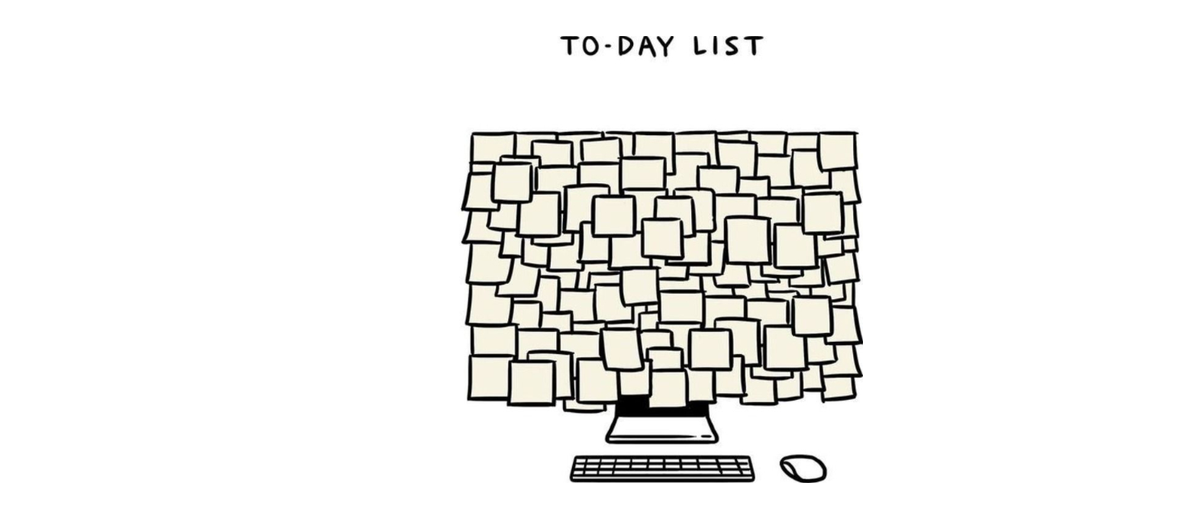
- The pile is not a to-do list. It is raw material. Treating it as a list is why it makes you feel worse, not better.
- Ask one question of every line: "is this actionable?" That single pass is the whole conversion.
- Rewrite every action so it starts with a verb. "Mum" is not a task. "Call Mum about Saturday" is.
- Do it in one sitting, not continuously. Sorting while you dump kills the dump.
- Nothing can guess what you meant. A tool can type the page out for you. Deciding what each line is stays yours.
- Photograph the page instead of retyping it. Polishr returns a messy page as a list of actions.
A brain dump becomes a to-do list the moment you ask one question of every line on it: can I do something about this? Everything else is tidying.
If the dump is on paper, get it typed out first. Ten seconds with Polishr, twenty minutes by hand, and that gap is why the second pass usually never happens.
Most people never make it. They write the page, feel better for an hour, then look at it next morning and feel worse. Same trap as a drawer of photographed notes you can never search: captured, and no further on.
Why the pile does not work as a list
Because it is the wrong object. The dump exists to get things out; a list exists to tell you what to do. David Allen's Getting Things Done keeps them apart formally. Step one is Capture:
“Write, record, or gather any and everything that has your attention into a collection tool.”
Getting Things Done, the five steps
Step two is Clarify, and it is the one people skip. A brain dump is a completed step one and an untouched step two.
What an unsorted pile costs you
Unfinished things take up room whether you look at them or not, an effect Zeigarnik described in 1927. A 2015 paper in Frontiers in Psychology puts the modern version plainly:
“the presence of an unfulfilled goal… resulted in poorer performance in the executive function tasks.”
Frontiers in Psychology, 2015
And the other half, which is the useful bit: “when participants had an unfulfilled goal which was later completed, the negative effect on executive function was no longer evident.” Finishing the thought releases the attention. Writing it down does not. A dumped page is a list of open loops you have now also written out.
The one-question pass
Work down the page once. For each line ask the Getting Things Done question, is it actionable?, and send it one of three ways.
Do this on a screen, where you can reorder and delete as you go, not on the paper itself. Wanting columns rather than lines is a different job again, covered in converting handwritten notes to Excel.
The verb rule is what does the work. Most dumped lines are nouns, and a noun cannot be done. "Mum" sits there for a fortnight. "Call Mum about Saturday" takes ninety seconds.
The rewrite, in one line
noun → verb + object + enough detail that you do not have to think again
Brain dump vs to-do list: the difference in one table
| Brain dump | To-do list | |
|---|---|---|
| Purpose | Empty your head | Tell you what to do next |
| Order | None, whatever arrives | Sorted, by when or where |
| Grammar | Nouns and fragments | Starts with a verb |
| How often | Whenever it builds up | Looked at daily |
| Done when | Your head is empty | Everything is crossed off |
Do it on paper, then convert
Paper keeps winning this, for the same reason it wins for handwriting generally: nothing is faster than a pen, and people say so plainly. One of the most upvoted answers in a thread about brain dump apps was simply:
“Honestly I find apps much too fiddly for a brain dump. A small notebook is the way for me.”
r/adhdwomen
They are right about the dump and stuck on the conversion. Paper is the best place to think and the worst place to keep a list. The same thread carries the wish outright: “An ADHD app that lets you brain dump all your thoughts to automatically organize them”.
Half of that a phone can do. Photograph the dump and Polishr types it back as action items, so the paper stays paper. It will not know that "Mum" meant Saturday. That part is yours, and it takes a second once the line is on a screen rather than buried in a photograph. We scored eight apps in brain dump apps for ADHD, and every route off paper is in how to convert handwriting to text.
Step two, done for you
Dump it on paper. Get the list back.
Photograph the page and Polishr types it back as a list of action items, so the sorting pass happens on a screen instead of a photograph. Or as clean notes, a table, or flashcards, in twelve languages.
Try Polishr freeiPhone. Free to start, then $9.99/month or $99.99/year.
Common questions
How often should I do a brain dump?
When your head feels full, plus one scheduled one a week. The weekly one catches what you never think about on a Tuesday. Doing it daily usually means you are dumping instead of clarifying.
What is a trigger list?
A prompt sheet of categories, so you remember the things that are not currently bothering you. Getting Things Done publishes one with over two hundred entries. Read it slowly and write down whatever it dislodges.
Is there a brain dump template worth using?
For the dump, no. A template is structure, and structure slows capture down, which is the opposite of the point. Save the structure for the second pass.
My handwriting is terrible. Does that matter?
Not for the dump, which is the point of doing it on paper. It matters for the typing-out step, and that is what Polishr is built for: a photograph of a real, fast, messy page rather than a tidy scan.
Should I sort while I dump?
No, and this is the most common mistake. Sorting uses a different part of your attention, and switching between the two means you stop remembering things. Empty first, decide second.
What if most of it is not actionable?
That is a normal and good result. A lot of what is in your head is worry, not work. Seeing that two thirds of the page needs no action is usually the most useful part of the exercise.
Can I do this without retyping the page?
Yes. Polishr reads a photograph of a handwritten page and gives it back as action items, so the sorting pass happens without you copying anything out. The full set of ways to get writing off paper is in how to convert handwriting to text.
Related reading
Sources. The five steps and the capture definition are quoted from the David Allen Company's What is GTD page. The two findings on unfulfilled goals and executive function are quoted from a 2015 paper in Frontiers in Psychology, which builds on Zeigarnik (1927) and on Masicampo and Baumeister's Consider it done! (Journal of Personality and Social Psychology, 2011). The two quotations from people doing this themselves are thread lines as Google displays them for r/adhdwomen and r/SomebodyMakeThis, quoted as published. All pages checked 1 November 2026.