Can I record my lectures? What the rules actually say
25 October 2026 · 8 minute read
Search this and you get a map of American wiretap law. Thirty eight states one way,
twelve the other, consult the table for your state.
For a lecture hall, that is mostly the wrong law. Wiretap statutes are about private
conversations, and a room with two hundred students in it is close to the opposite of one.
The rules that actually decide whether you can record your lecture are somewhere else
entirely, and one of them turns on something most students never think about: whether
anyone else in the room speaks.
In short
Recording laws for in-person conversations generally hinge on a reasonable expectation of privacy, which a lecture rarely has.
Your university's policy and your instructor's permission are the constraints that actually bind you.
The moment an identifiable classmate speaks on your recording, part of it becomes a protected student record under federal privacy law.
Students registered with disability services usually have a documented right to record. Ask that office first.
Asking the professor takes one sentence and settles all of it. It is also the most common answer students give each other.
Why the state law tables miss the point
The published guides do not even agree with each other. One counts twelve states
requiring everyone's consent, another eleven, another nine, because several states apply
different rules to phone calls than to conversations in a room. Connecticut, Michigan,
Oregon and Nevada turn up on different sides of the line depending on who wrote the
table.
More useful is what those laws are for. The Reporters Committee for Freedom of the
Press, which maintains the reference journalists actually use, puts it this way for
in-person recording:
Recording laws generally require consent only if the individuals being recorded have
a reasonable expectation of privacy. Not every state's laws make this distinction,
however.
Reporters Committee for Freedom of the Press, Reporter's Recording Guide
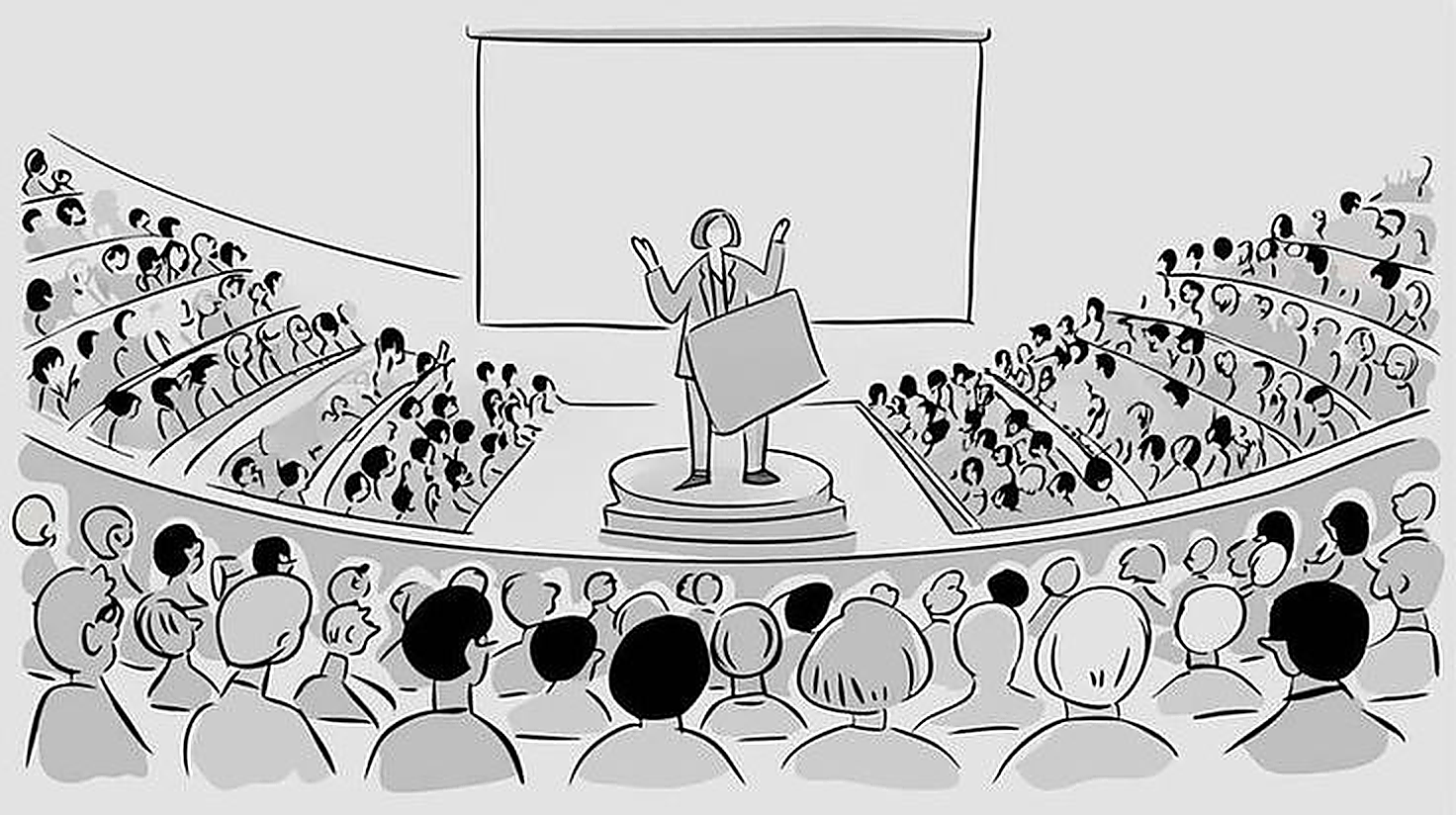
A lecture is delivered to a room of strangers, often streamed, often already recorded
by the university itself. Whatever else it is, it is not a private conversation. That is
why the wiretap angle, which every page one result leads with, usually resolves to
“yes, and it was never really the question”.
The same guide counts about eleven states that primarily require all party consent,
four more that require it for either phone calls or in-person conversations, and two,
Hawaii and Maine, that require it only in particularly private places. Those numbers
matter for recording a phone call. They rarely decide a lecture.
What actually governs it
Three things, in the order they will cause you a problem.
01
Your university's policy
Institutions set their own rules, and they are enforceable against you through the
student conduct process regardless of what your state's wiretap statute says. Some
require written permission. Some permit recording for personal study and forbid sharing.
Some leave it to the instructor. This is the document that decides your case, and almost
nobody reads it.
Find it by searching your university's site for “lecture recording policy”.
02
Your instructor
Where policy leaves it open, the lecturer decides. The overwhelming advice students
give each other is to ask on the first day rather than afterwards, and most instructors
say yes. Some will say yes with conditions, usually that you do not post it anywhere,
which is a reasonable condition and worth honouring.
There is also a content question underneath. Universities commonly treat lecture
material as belonging to the instructor or the institution, which is why sharing a
recording is treated far more seriously than making one.
Say that you want it for your own notes and will not share it.
03
The other students in the room
This is the one that surprises people. Under FERPA, the American federal student
privacy law, a recording of your instructor is not a student record. A recording that
captures an identifiable classmate is a different object. The University of Illinois
Chicago states the distinction plainly in its registrar's guidance:
If a recording includes only the instructor, it is not a student record and FERPA
does not limit its use. If the recording includes students asking questions, making
presentations or leading a class, and it is possible to identify the student, then the
portions containing recordings of the student do constitute protected educational
records.
University of Illinois Chicago, Lecture Recording Privacy FAQ
Seminars, discussion classes and any lecture with a question and answer section fall
into this straight away. It does not make your recording illegal. It does mean the file
on your phone now contains something other people have rights over, and that posting it
to a group chat is a different act from keeping it.
In practice keep it to yourself, and delete it when the exam is over.
If you have a documented need
Students registered with a disability or accessibility office are usually in a
different position, with recording listed as a formal accommodation. That is a right the
institution has already granted, and it does not depend on an individual lecturer's mood.
If you are struggling to keep up in lectures and have not spoken to that office, it is a
better first move than reading state statutes.
You have the recording. Now what?
The transcript is the easy half. It is also the half that research says does the least for you.
An hour of lecture comes out at somewhere around nine thousand words of transcript. You
are not going to read that. And if you did, it would be close to the least useful hour you
spent on the module.
That second part is not a hunch. In 2013 John Dunlosky and four colleagues reviewed ten
common study techniques for Psychological Science in the Public Interest and
rated each one on how much it actually helps. Rereading, highlighting and summarising all
came out low utility, despite being what most students do. Two techniques came out high,
and one of them was practice testing: shutting the book and making yourself produce the
answer.
Read that against a lecture transcript and the conclusion is uncomfortable. A
transcript is rereading with extra steps.
Which changes what the recording is for. The audio is insurance against the bits you
missed, not the thing you revise from. The revising happens when you close the notebook
and say out loud what the lecture was about, then check how much of it you got.
The options for the full recording
If you do want the whole hall captured, the choice turns on one thing, and after
everything above it is not a small one: whether the audio leaves your phone.
Capabilities as documented by each maker in October 2026.
Option
Cost
Audio goes
What you get back
Apple Notes, Voice Memos
Free
Stays on device
A transcript
Otter, Notta and similar
Free tier
To their servers
A transcript with speakers marked
ChatGPT, Gemini
Free tier
To their servers
A summary in a chat
You have just read a section about classmates having rights over their own recorded
voices. Uploading the file is a decision about their audio as well as yours, and the
permission your lecturer gave you was almost certainly not for that.
Where Polishr fits, and where it does not
One tool worth being straight about:
Polishr is not a lecture recorder. One recording
stops at fifteen minutes, which is a third of a lecture. For the whole hall, use something
built for it.
Fifteen minutes happens to be the wrong length for a lecture and close to the right
length for what follows one. Walk out, open it, and talk for ten minutes about what the
lecture covered without looking at your notes. That is practice testing, done at the one
moment you will never be better placed to do it. The transcription runs on the phone, so
that recording stays on the phone.
Then you pick what it comes back as. Flashcards, which are practice testing in a form
you can repeat on the bus. Bullet points, if what you want is the shape of the argument.
Action items for the reading you were set. Afterwards you change it in plain words:
shorter, as questions, as a table. The notes you wrote by hand during the lecture go in
the same way, photographed, which is covered properly in
how to digitize handwritten notes.
Free to start, then $9.99 a month or $99.99 a year. It is not on the App Store yet.
Common questions
Can I record a lecture without permission?
Often lawfully, and still against your university's rules. Those are two separate
questions and the second one is the one that reaches you, through the conduct process
rather than a court. Check the policy, then ask the instructor.
Can I record my professor's lectures?
Usually yes, for personal study, once you have asked. Most instructors agree. The
answer changes if your institution requires written permission or if the lecturer has
said no, and it changes sharply if you plan to share the file.
Is it legal to record classroom lectures?
In most American states, recording a conversation you are part of is lawful, and
in-person recording laws generally apply where there is a reasonable expectation of
privacy, which a lecture hall rarely offers. This is a summary of published guidance
rather than legal advice, and the position differs by state and by country. Your
institution's policy is the practical answer.
Can I record conversations in Indiana?
Indiana is a one party consent state, meaning you may record a conversation you are
taking part in. The Reporters Committee's state by state guide is the reference to check
before relying on that for anything beyond a lecture.
Does my university's policy beat state law?
They do different jobs. State law decides whether an act is unlawful. Your university's
policy decides whether it breaches the agreement you signed when you enrolled. Something
can be perfectly lawful and still get you a conduct hearing.
What about an online lecture on Zoom or Teams?
The same three constraints apply, and recording is usually more visible, since the
platform announces it. Many institutions already record and post those sessions, which
makes asking easier rather than harder.
Can I share the recording with classmates who missed it?
This is the one to be careful with. It is where the instructor's rights over the
material and your classmates' rights over their own voices both come into play, and it is
what most policies that forbid anything forbid. Keep it to yourself.
Does any of this apply outside the United States?
FERPA does not. It is an American federal law. Most countries have an equivalent
student privacy regime and most universities have a recording policy, so the structure
holds even though the statutes differ. The advice to ask the lecturer travels everywhere.
Ten minutes, straight after
Say what you remember. Get flashcards back.
Polishr takes a spoken recap of up to fifteen minutes, transcribed on the phone so it stays there, and hands it back as flashcards, bullet points, a table or action items. Photographed handwriting goes in the same way.
iPhone. Free to start, then $9.99/month or $99.99/year.
Sources and notes. This article reports published guidance and is not
legal advice. The consent framework, the counts of all party states and the reasonable
expectation of privacy test are from the
Reporters
Committee for Freedom of the Press, whose state by state guide is the reference to use
for a specific jurisdiction. The FERPA distinction is quoted from the
University
of Illinois Chicago Lecture Recording Privacy FAQ, which describes that institution's
guidance; other universities word it differently. Published state counts disagree with
each other, which the article says rather than picking one. Nothing here is specific to
your institution, your state or your country. The study technique ratings are from Dunlosky, Rawson, Marsh, Nathan and Willingham (2013), Improving Students' Learning With Effective Learning Techniques, Psychological Science in the Public Interest 14(1), which rated practice testing high utility and rereading, highlighting and summarisation low. Capabilities of the tools listed are as
documented by their makers in October 2026 and change often. Polishr caps a single voice recording at fifteen minutes and is not yet released on the App Store.